Lisa is a Principal of European IP firm Arnold & Siedsma, a member of the Rouse Group, with its head office in the Netherlands. She is a European Patent Attorney with a background in electrical engineering, physics and semiconductor technology, and more than 16 years’ experience as a Patent Examiner at the EPO.
Each year, Oxford University Press publishes a ‘word of the year’, a new word or phrase that reflects current social trends. In 2024, it was ‘brain rot’ i.e. the result - for many of us all too familiar - of too much mindless scrolling. It is one example of the negative effects of technological development, but there is also a more general concern that humans simply cannot keep up with the rapid pace of scientific and technological development. Lisa doesn’t pretend to have any definitive solution to the problem, but her approach to life gives cause for optimism. She is deeply invested and involved in the world of science and scientific and technological development, but at the same time regards both the natural world and human values and relationships as fundamental.
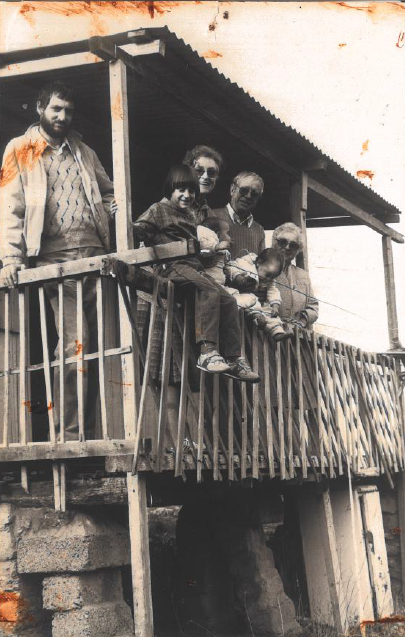
Lisa grew up in France, but her father’s family was Spanish, and her Spanish heritage looms large in her background. Her grandfather came to France as a seven-year-old with his family. Like many Spanish emigrants at that time, they had come in search of a better life and settled as farmworkers in the South of France. Although very bright, being the oldest child he started work when he was eleven so that his younger siblings could go to school. They lived in a neighbourhood of mostly Spanish emigrants, and even after a generation or two, Spanish culture remained strong. One of Lisa’s fondest memories is the holiday house/shed they built at the seaside, with no electricity or running water. All her childhood holidays were spent there with her extended family. Despite the obvious lack of comfort, they were some of the happiest days of her life.
Apart from these family holidays, Lisa’s rather romantic and bohemian childhood - which involved lots of moving around from place to place, lots of books and outdoor activity, and no TV - also influenced her approach to life. She and her mother and father and two sisters spent every free moment in a camper, uncovering the secrets of the countryside – getting to know plants and animals, skies and clouds, and the effect of the seasons. Lisa’s father worked at Electricité de France, EDF, the French government owned electric utility company, initially as an electricity technician - because he had not had the opportunity to study – and later training within the company to become an electrical engineer. Growing up, Lisa loved listening to the stories her father and grandfather told. She could see how clever they both were, how much they had been disadvantaged by lack of opportunity to study, and how they were always focused on learning. That helped shape her outlook on life and her desire always to do, and to be, the best she could - starting by studying electrical engineering and obtaining an MSc in Electrical, Electromechanical and Automation Engineering from the University of Toulouse.
Given her background, as well as her natural inclination, electrical engineering was probably an obvious choice. But she had also been exposed to foreign languages from an early age and that had broadened her horizons. Her mother had studied English with a specialisation in phonetics and often recited nursey rhymes to Lisa in English. She also took Lisa to England at a very young age. Spanish and English were thus introduced early in her life. German, she learned at school and, as it was one of the EPO official languages, later developed to a professional level. Dutch is a more recent acquisition – she says she has, in effect, learned it from her children, but she did also go to evening courses, and studied extra to qualify as a Netherlands Patent Attorney. By then she was 40 years old and her youngest child only three, so it was a challenge. Ending up at the EPO was partly due to her interest and skill in languages; partly because of a reference to a position at the EPO, which up to that point she had never heard of, made by one of her lecturers; and partly because of her future husband’s encouragement. At the time he was a fellow student. She had done internships at a military company, a research lab and at the EDF and wasn’t thinking of a career in IP. But she was interested in languages, the law, and international experience and the EPO seemed a good way of combining all three. She ended up in the Netherlands because The Hague office was the only one offering to reimburse interview travel costs and she had no money.
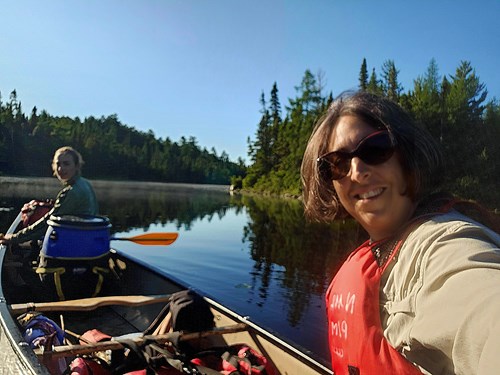
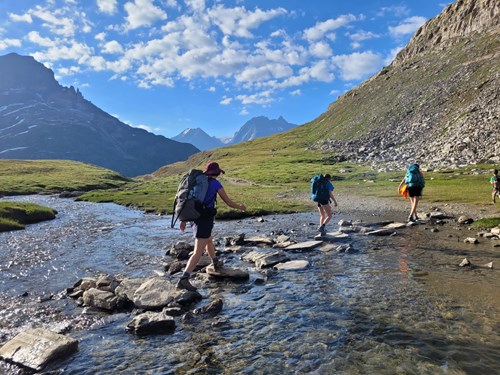
Nevertheless, the Netherlands must have been meant to be as, quite serendipitously, soon after their arrival, they heard of a great position at the European Space Agency there and her husband, Olivier, applied. Now, all these years later, he is, and very happily, a satellite scientist there. He and Lisa obviously have a shared interest in the sciences, but, apart from that, they are in some ways complete opposites – whereas her background is cosmopolitan and unconventional, his is classically French. He went to an all-boys private boarding school, and his father is a French politician. They share the most important things though - values and approach to life; in other ways they complement each other. Olivier and the three children are musical, he plays the piano and the children play the horn, violin and cello. So, it’s a scientific and musical household – but it’s also an outdoors household. Lisa has introduced her children to the world of nature she loves, and whenever possible they all venture into the wild, their most recent adventure a full-autonomy canoeing trip in Canada where they didn’t see a soul for days.
Lisa likes to quote one of her favourite poems, Invictus, by the 19th century English poet, William Ernest Henley. It ends with the words
“I am the master of my fate:
I am the captain of my soul.”
Perhaps in the end, whether we will be left behind by science is up to us.