

For multinationals, China’s trade mark system presents a paradox: legal frameworks appear familiar, yet brands often fail on cultural grounds. These failures – regularly dismissed as isolated legal setbacks – reveal a systemic flaw in cross‑cultural brand management.
This article argues that success in China requires moving beyond legal compliance to embrace cultural compliance as a core strategic function.
By analysing pivotal cases through the lenses of high‑context communication and long‑term orientation, we provide a practical framework for trade mark counsel and brand strategists to navigate the cultural minefield and secure brand equity from the outset.
When a trade mark like SCAPEGRACE or DEADMAN'S FINGERS is rejected under Article 10.1.8 of the Chinese trade mark Law, the immediate reaction is often to question the legal reasoning. However, a closer examination reveals a pattern that transcends legal interpretation: many brands stumble over invisible cultural tripwires.
The “public order and good morals” clause is not a legal anomaly but a legislative mirror of deep‑seated social values. In China’s 'high‑context' culture (where information is implied through context rather than explicit language) and long‑term-oriented society (which emphasises history, tradition and future outcomes), trade marks function as cultural symbols, carrying meanings that extend far beyond their literal translation.
China is not unique in policing trade mark morality. Similar provisions exist globally. Article 7(1)(f) of the EU trade mark Regulation refuses marks that are contrary to “public policy or accepted principles of morality” and the US Lanham Act has historically grappled with similar restrictions. The legal frameworks are structurally similar across jurisdictions.
Therefore, any potential rejections in China are not caused by the uniqueness of the law, but sometimes by a lack of understanding on the applicant's part of the specific market culture. A trade mark that passes the 'morality test' in a 'low-context' culture may fail in China’s 'high-context' culture. Negligence can lie not in misreading the statute, but in misreading the cultural definition of what is 'moral' or 'socially acceptable' in the target market.
When a global brand name triggers this clause, the brand loses out more than once. There is usually a series of expensive problems, which forces the company into a dilemma: either accept a fragmented global identity by launching under a completely different Chinese name, or pay exorbitant premiums to acquire alternative trade marks.
Worse still, the ensuing legal battles and rebranding efforts can lead to indefinite product launch delays, allowing local competitors to seize market share.
At its core, the law reflects cultural values. Article 10.1.8 is not an arbitrary rule; it represents China’s collective ideals. trade marks do more than identify products; they serve as cultural symbols. In China’s high-context, long-term-focused society, trade marks are judged by their historical associations, effects on social order and political connotations, not just their literal meaning.
Separating 'legal compliance' from 'cultural compliance' is a strategic mistake. In China, following cultural norms is essential for protecting your brand and avoiding costly setbacks in the market.
Cultural misalignment often originates in the boardroom, rooted in what international management theory identifies as an ethnocentric orientation. According to HV Perlmutter’s Ethnocentric, Polycentric, Regiocentric, Geocentric (EPRG) framework, ethnocentrism is the primary culprit behind brand crises. Decision makers may unconsciously assume that the values, aesthetics and historical perspectives of their home country are universally applicable, thus ignoring the unique and sensitive cultural sensibilities of the host country.
The dispute over SCAPEGRACE is a key case study. New Zealand gin brand Rogue Society Distilling Co applied to register the trade mark SCAPEGRACE (No G1350298) in China but the Beijing High Court found the term, which translates to connotations of ‘rogue’, ‘scoundrel’ and ‘hooligan’ in Chinese, to be offensive to socialist morals and inconsistent with mainstream values, especially for alcohol products.
The cultural misalignment is stark. The home-country view of “Scapegrace” may suggest a playful rebel, potentially aligning with some Western ‘edge’ subcultures. However, in the host country, its Chinese translation evokes a negative social archetype with no humorous redeeming quality.
The applicant’s defence of contrasting 'Western humour' with 'Chinese morals' was rejected. The court’s message was clear: local moral standards are not subordinate to foreign cultural framing.
For counsel, the takeaway is never to assume that cultural connotations translate. A term’s intent in its home market is irrelevant. The first step in clearance must be a semantic deep dive with native cultural experts to uncover all possible literal, colloquial and historical meanings in the target language. If the core meaning violates foundational social values, abandon the mark. No amount of legal argument about original intent will succeed.
Brands in the ‘grey area’ (eg, brands linked to 'taboo' imagery such as ghosts or horror) rely on careful use of visual and textual context. If the meaning crosses into an 'absolute taboo', even strong intellectual property cannot protect it.
The video game Plants vs Zombies had a positive breakthrough through context dilution. The word ‘zombie’ (僵尸) is generally associated with superstition and horror in Chinese culture. It is a high-risk term. Yet in Zuigaofaxingzai (2018) No 89, the Supreme People’s Court upheld the registration.
Screenshot from the Chinese version of Plants vs Zombies

Source: Plants vs Zombies
The court noted that the video game used cartoon visuals to make zombies less frightening. This is an example of high-context 'filtering'.
As part of its linguistic strategy, the Chinese name for Plants vs Zombies used grammar to frame plants as heroes defeating zombies.
The takeaway is that high-context cultures allow for flexible meaning, but this flexibility must be strategically engineered. A high-risk term like ‘zombie’ can be registered if it is structurally and narratively balanced in a positive framework. The key is to proactively provide examiners – and the public – with a culturally acceptable story (eg, heroes defeating monsters or science versus superstition), which reframes the negative element and lessens its impact.
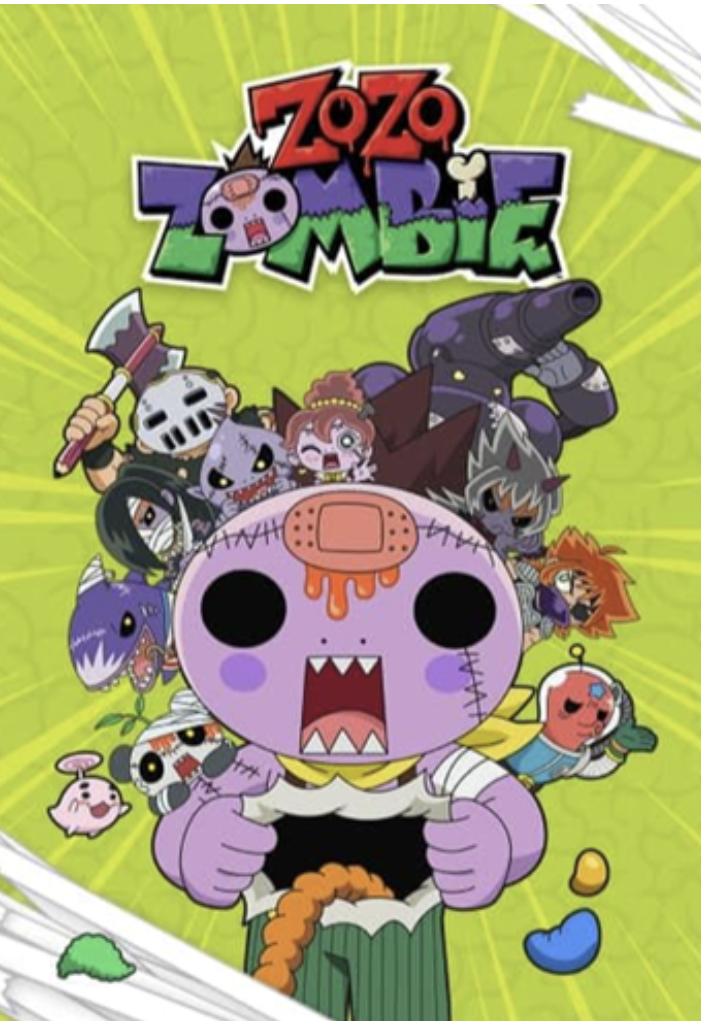
However, even with a cartoonish style, the ZOZOZOMBIE trade mark was rejected by the Beijing Intellectual Property Court in November 2020 ((2020) Jing 73 Xingchu No 14594). This serves as a warning to brands that try to register trade marks based on “cuteness” alone.
Artwork for TV series Zo Zo Zombie
Source: Zo Zo Zombie
There are several reasons behind the trade mark refusal. Unlike the case of PLANTS VS ZOMBIES, the examiners focused their attention on the main term ‘zombie’ and the playful alliteration of ‘zo zo’ did not influence them. In the context of censorship standards, zombies are strongly associated with feudal superstition, which appears as a negative item on lists concerning public interest.
In addition, the success of PLANTS VS ZOMBIES can be partly attributed to the inclusion of ‘plants’ (perceived to represent positivity or science), which provided a counterbalance. As an independent trade mark, ZOZOZOMBIE lacked this seeming positive element, resulting in its interpretation as purely “promoting superstition”.
For counsel, this example demonstrates that 'cuteness' or stylistic play alone cannot neutralise a core term that sits on an absolute taboo list (eg, feudal superstition). Without a substantive positive counterweight in the mark itself, examiners will default to the term’s most harmful association.
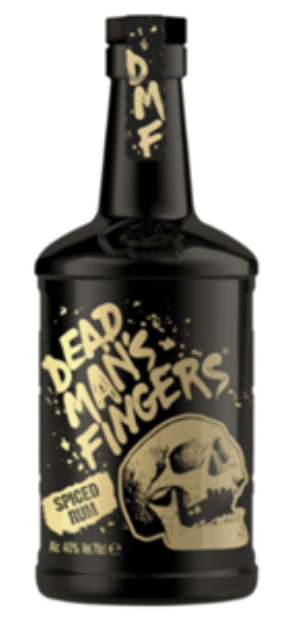
UK rum brand Dead Man’s Fingers and its application for DEADMAN’S FINGERS serve as an example of what can happen when visual context is overlooked.
Dead Man’s Fingers rum bottle
Source: Dead Man’s Fingers
The company's application was rejected by the Beijing Higher People’s Court in May 2020 ((2020) Jingxingzhong No1628).
First, there was cognitive mismatch. The brand claimed that, in British slang, 'dead man's fingers' could refer to the finger-like gills inside a crab, and was not a frightening term. Yet, the court held that most Chinese consumers were likely to see only the literal translation.
Second, if the intent was to subtly reference crab gills, the packaging’s prominent skull graphic made an opposite, explicit statement. The word 'deadman' and the skull image on the bottle were seen to work together as image-text corroboration that firmly reinforced the interpretation of death and horror.
The takeaway for counsel is to conduct a separate visual context review for the Chinese market. Packaging that reinforces brand story in the West may anchor a negative literal translation in China.
Some multinational brands are perceived as ‘cool’ or ‘edgy’ in the West, but if their literal translation violates China’s core moral baseline, no explanation will suffice. Absolute taboos in China include:
One example touching on violence and negativity involved US espresso equipment maker Slayer ((2019) Jing 73 Xingchu No 5072). The Beijing Intellectual Property Court noted that although ‘slayer’ can also imply meanings such as a killer performance in the West, it literally means ‘murderer’ in China.
Death and demons are cultural taboos in China. An application to register NO TIME TO DIE for the James Bond film of the same name was rejected by the Beijing Higher People’s Court in March 2022. Chinese culture has a deep taboo against the word ‘die’ (死). Using it in commerce (excluding funerals) is considered highly inauspicious and offensive.
Similarly, Japanese video game developer Konami faced hurdles at the Beijing Intellectual Property Court when registering its classic gothic horror video game series Castlevania, which translates literally to ‘demon castle’ in Chinese (恶魔城). 'Demon' carries an inherently negative meaning and is viewed as promoting evil in China.
The application for MHMEDICALHEMP demonstrated a legal and moral red line. While medical hemp is legal in some countries and states, cannabis is strictly controlled in China. Using ‘hemp’ in a trade mark violates anti-drug laws and public interest, the Beijing Intellectual Property Court stated in July 2019 ((2019) Jing 73 Xingchu No 6006).
One way to overcome challenges is to leverage administrative decisions to reduce uncertainty. When registering a trade mark for its video game Diablo III: Reaper of Souls, US video game developer Blizzard Entertainment encountered concerns from the Beijing Higher People’s Court that ‘reaper’ (夺魂) and ‘sickle’ (镰) are associated with death. To demonstrate the game’s safety, Blizzard provided approval documents from the National Radio and Television Administration (NRTA).
The reasoning was straightforward: if the content has been approved by censors like the NRTA or the National Press and Publication Administration, it aligns with socialist morals. As such, the trade mark office should uphold this consistency.
A trade mark’s success in China relies on the applicant's cross-cultural management skills. Legal compliance is essential, but cultural adaptation secures brand recognition, value and growth. Multinationals should develop integrated management systems covering strategy, execution and organisation.
This involves implementing a dual screening system for culture and law. Before carrying out legal plagiarism checks, companies should conduct an initial cultural review, focusing on the following areas:
Companies should also implement proactive management based on the full symbolic context. In high-context cultures like China, a trade mark’s meaning derives from text, visuals and narrative. Enterprises should actively design trade marks by:
Finally, companies should break down departmental silos and collaborate to achieve brand culture compliance. Effective trade mark management depends on cross-departmental cooperation. This means sharing knowledge between:
For multinationals in China, understanding both the law and the local culture is crucial for brand success. Cultural compliance is not just a legal need, but a vital part of long-term business strategy.
Before finalising any brand or trade mark for use in China, use this checklist to conduct a systematic pre‑emptive review. Treat this not as a last‑step compliance exercise, but as a strategic due diligence process that aligns your brand’s identity with China’s cultural and regulatory reality.
| Core semantic safety review | Absolute red line scan | Does the name, logo or slogan directly invoke prohibited concepts under Chinese law or deep‑seated taboos (eg, explicit references to death (死), evil (恶魔), violence, drugs, gambling or feudal superstition (迷信))? |
| Hidden historical and political risks | Could any element – including homophones, visual echoes or unintended connotations – evoke sensitive historical events, geopolitical disputes or national symbols (eg, unintentional references to territorial issues, political figures or historical trauma)? | |
| Linguistic deep dive | Has a native‑speaking cultural consultant reviewed all possible meanings in Mandarin and major dialects, including slang, internet memes and generational lingo? | |
| Extended association and context test | Cultural translation of brand personality | Does your brand’s tone (eg, rebelliousness, dark humour or individualism) translate as disrespectful, vulgar or socially negative in a collectivist, harmony‑oriented context? What reads as edgy in the West may read as anti‑social in China. |
| Narrative balancing act | For elements with marginal or risky connotations (eg, horror, fantasy and the supernatural), have you built a strong, positive overarching narrative? For example, Plants vs Zombies succeeded by framing the conflict as “heroic plants defeating monsters”, rather than glorifying zombies. | |
| Visual symbol calibration | Symbolic meaning audit |
Do your core visual assets (eg, colours, animals, numbers, gestures and character designs) carry negative, funerary or otherwise inauspicious meanings in Chinese tradition or contemporary perception? Examples include:
|
| Contextual adaptation plan |
Is there a tailored visual strategy for China to mitigate risk while maintaining brand essence? To soften potentially harsh imagery, consider:
|
|
| Internal synergy and resource verification | Cross‑functional risk escalation protocol | Does your process mandate that medium or high‑risk flags from the legal team trigger an automatic review with a committee comprising of marketing, public affairs and China‑based strategy leads? Importantly, the legal team should not have sole veto; brand risk is a business decision. |
| Contingency and leverage preparation | Do you have culturally adapted back-up names or designs ready? Has your government relations team identified potential administrative channels (eg, prior approvals from the NRTA for media‑linked marks), which could be leveraged to pre‑empt or resolve disputes? As seen in the case of Diablo III: Reaper of Souls, regulatory endorsements can provide decisive leverage. |

