
Date: 9 March 2026
On 9 March, Zhang Jun, President of the Supreme People’s Court (SPC), delivered a work report to the Fourth Session of the 14th National People’s Congress. Key contents concerning intellectual property are outlined below:
People’s Courts in China have further strengthened judicial protection of intellectual property rights. In criminal law enforcement, a total of 19,000 offenders of intellectual property crimes were sentenced throughout the year, representing a year-on-year increase of 6.2%. In civil cases, the punitive damages system has been fully implemented. In a trade secret infringement case, the Court ordered malicious infringers and their affiliated company to pay joint and several compensation of RMB 380 million (approx. US$ 55 million), substantially raising the cost of IP infringement. In addition, the People’s Court adjudicated AI-related cases. In a typical case where generative AI provided false information, the Court ruled that as the developer had fulfilled its due care obligations and no actual damage had occurred, there was no liability, retaining a 'fault tolerance' scope for scientific and technological innovation.
In data and personal information protection, the People’s Courts concluded 908 data disputes and 915 personal information protection cases, with a year-on-year growth of 65%. It clarified that personal information processing must abide by the principles of legality, necessity and good faith. Against algorithm abuse, through hearing a typical dispute of an e-commerce platform, the Court balanced the legitimate rights and interests of merchants and consumers and prompted multiple platforms to rectify unreasonable refund rules, thereby facilitating the sound and regulated development of the digital economy.
Source: Supreme People’s Court
https://mp.weixin.qq.com/s/8e0kuEMAKy7P_PJplfnxxQ
日期:2026-03-09
3月9日,最高人民法院院长张军向第十四届全国人民代表大会第四次会议报告工作,涉及知识产权相关内容具体如下:
人民法院进一步加强知识产权司法保护力度。在刑事打击方面,全年共判处侵犯知识产权犯罪1.9万人,同比增长6.2%。在民事保护中,惩罚性赔偿制度的功能得到充分发挥,在一起技术秘密侵权案中,法院判令恶意侵权人及其公司连带赔偿3.8亿元,显著提高了侵权违法成本。另外,人民法院妥善审理涉人工智能案件,对于一起生成式人工智能服务出现差错的典型案件,法院认定研发者已善尽注意义务且未造成实际损害,不构成侵权,为科技创新保留“容错”空间。
在数据与个人信息保护领域,人民法院审结数据纠纷案件908件,审结个人信息保护案件915件,同比增长65%,明确处理个人信息应遵循合法、必要、诚信原则。针对算法滥用问题,法院通过审理某电商平台纠纷典型案件,统筹保护商家和消费者合法权益,推动多个平台纠正不合理的退款规则,促进数字经济规范健康防战。
资料来源:最高人民法院 2026-03-09
新闻链接:https://mp.weixin.qq.com/s/8e0kuEMAKy7P_PJplfnxxQ
Date: 10 March 2026
The SPC is drafting judicial policy documents to clarify rules on the originality of AI-generated content and the legal nature of data training. Li Jian, Chief Judge of the Third Civil Division of SPC, stated that ‘whether using others’ works for AI data training constitutes fair use and how to define the liability of AI service providers are not only controversial within the legal community but also crucial to the future of the AI industry. Intellectual property law must strike an appropriate balance among the interests of innovators, competitors, consumers, and the general public.’
Citing the ‘Ultraman’ text-to-image infringement case concluded by the Hangzhou Internet Court, the SPC stressed that the duty of care of generative AI service providers should be kept to a reasonable level consistent with their information management capabilities, making clear that ‘a generative AI service is subject to liability only if it violates the principle of good faith and accepted commercial ethics, disrupts market competition order, or harms the lawful rights of other operators or consumers.’
Source: Hangzhou Internet Court
https://mp.weixin.qq.com/s/YcnrEN7aL_3X05uM131XSQ
日期:2026-03-10
最高法正在起草相关司法政策文件,拟对人工智能生成物独创性认定规则、数据训练行为的法律性质进行明确。最高法民三庭庭长李剑表示,“人工智能数据训练使用他人作品是否构成合理使用的问题,以及人工智能服务提供者的责任如何界定的问题,不仅在法律界颇具争议,也关乎人工智能产业未来发展。知识产权必须平衡好创新者、竞争者、消费者和社会公众等多元主体的利益”。
最高法以杭州互联网法院审结的“奥特曼”文生图侵权案为例,强调应将生成式人工智能服务提供者的注意义务控制在与其信息管理能力相适应的合理程度,明确“生成式人工智能服务只有在违反诚实信用原则和公认的商业道德,扰乱市场竞争秩序,损害其他经营者或者消费者的合法权益时,才受法律规制”。
资料来源:杭州互联网法院 2026-03-10
新闻链接:https://mp.weixin.qq.com/s/YcnrEN7aL_3X05uM131XSQ
Date: 5 March 2026
The track-shaped bar chart design is an iconic design of Puma on footwear, which first made its debut at the 1958 World Cup in Sweden. Since 1976, Puma has successively obtained multiple bar chart trademarks for footwear products in China, such as No. G426712, No. G581191, No. G925647, etc.
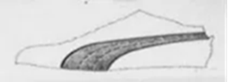
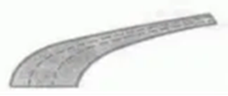
From left to right are trademarks No. G426712, No. G581191 and No. G925647 owned by Puma.
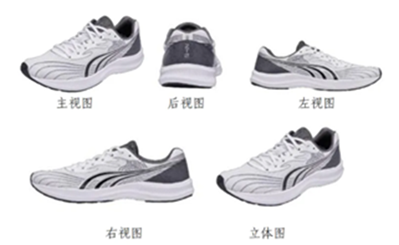
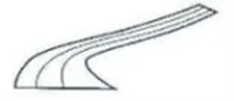
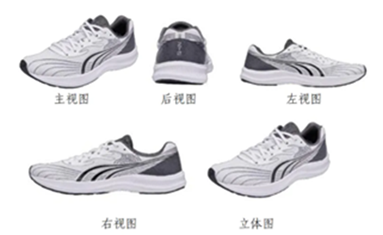
Since 2010, Jiangsu XX Sports Goods Co., Ltd. (XX Sports), the third party in this case, has successively applied for multiple industrial design patents—similar to Puma's 'track' bar chart trademark—for use on shoe uppers (hereinafter 'the subject industrial design patents'). Puma filed invalidation applications on the grounds of conflicts with its prior trademark rights in the 'bar chart' marks. XX Sports, in response, claimed that its design patent application constituted lawful use of trademark No. 3016612 trademark (No.612) that had been registered by another company in relation to sportswear, climbing shoes, etc., applied for by another company in 2001 and licensed to XX Sports. The CNIPA partially maintained the subject patent rights, and the Beijing Intellectual Property Court dismissed Puma's lawsuit at first instance. Puma appealed to the SPC.
 |
|
|
Industrial Design Patents of XX Sports |
No. 3016612 Trademark |
The SPC held that the design at issue prominently features the ‘track’ device on the side panel of the shoe upper, which is a customary placement for graphic trademarks on footwear products. Such use is likely to attract the attention of the relevant public and to serve to identify the source of the goods, thus constituting trademark use. In addition, both the design at issue and Puma’s prior trademarks are used on athletic shoes, and they are similar in overall shape, the area and layout of their component parts, compositional design, and the direction of lines. Given that Puma’s ‘track’ marks enjoy high recognition and distinctiveness, the design at issue is likely to cause confusion. At the same time, the SPC pointed out that the design at issue is markedly different from the No. 612 trademark: the curved portion accounts for a larger proportion, and the three lines have not been completely merged into a single arc, thereby significantly altering the distinctive features that differentiate the No.612 trademark from the Puma’s trademark. Accordingly, the design applications do not constitute a legitimate and proper use of the No. 612 trademark.
In final judgments on seven disputes over the invalidation of design patent rights, the SPC held in all cases that the designs at issue conflicted with Puma’s prior trademark, revoked the first-instance judgments in six of the cases, and ordered the CNIPA to re-examine and issue new decisions on Puma’s applications for declarations of invalidity.
Source: IP Economy
https://mp.weixin.qq.com/s/1eTXnQHFuc2Cd2G89Ak99g
日期:2026-03-05
形如跑道的条形图设计是彪马公司在鞋履上的标志性设计,早在1958年就在瑞典世界杯上首次亮相。1976年起,彪马公司陆续在中国取得多枚鞋履商品上的条形图商标,如第G426712号、第G581191号、第G925647号等。
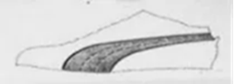
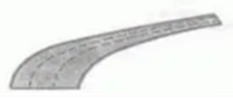
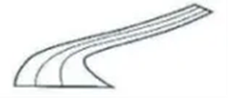
从左往右依次为彪马公司拥有的第G426712号、第G581191号、第G925647号商标
本案第三人江苏某体育用品公司自2010年起陆续申请多件使用于鞋帮位置的、与彪马“跑道”条形图商标图案近似的外观设计专利(下称“涉案外观设计”)。彪马公司以涉案外观设计与其在先注册商标权冲突,针对上述一系列涉案外观设计提起无效宣告请求。江苏某体育用品公司则主张其权利来源为案外公司2001年申请的第3016612号运动服、爬山鞋等商标。国家知识产权局部分维持涉案专利权,北京知识产权法院一审驳回彪马公司诉讼请求,彪马公司不服上诉至最高人民法院。
|
|
|
|
江苏某体育用品公司外观专利 |
第3016612号商标 |
最高法认为,涉案外观设计将“跑道”图标突出使用于鞋帮侧面,属于鞋类产品上图形商标惯常的标注位置,易被相关公众注意并用于识别商品来源,构成商标性使用。此外,涉案外观设计与彪马公司的在先商标均用于运动鞋,二者在形状、各部分布局面积、构图设计、线条走向上近似,且彪马公司的“跑道”条形图标识具有高知名度与显著性,因此涉案外观设计容易导致混淆误认。同时最高法指出,江苏某体育用品公司的外观设计与“612号”商标具有明显区别,弧线部分占比更大,三条线并未完全合并成一条弧线,明显改变了其中区别于彪马商标的显著特征,不构成对612号商标的正当合法使用。
最高人民法院就双方七件外观设计专利权无效纠纷作出终审判决,均认定涉案外观设计与彪马在先条形图商标构成权利冲突,撤销其中六起案件的一审判决,并判令国家知识产权局就彪马公司的无效宣告请求重新作出审查决定。
资料来源:知产财经 2026-03-05
新闻链接:https://mp.weixin.qq.com/s/1eTXnQHFuc2Cd2G89Ak99g
Date: 23 March 2026
Company Y is the copyright owner of the V3.0 computer software ‘i‑DiaPro Hemodialysis Electronic Medical Record System.’ It discovered that its former employee Wu, together with Wu’s current employer Company H and its affiliated companies Company H2 and Company W, had registered and delivered highly similar software systems without authorization. The First‑instance Court dismissed Company Y’s claims on the grounds that its rights basis was unclear and that the authenticity of its evidence was questionable. Dissatisfied, Company Y appealed to the SPC.
One of the key issues in dispute concerned the basis of Company Y’s software copyright. Company H submitted a judicial appraisal report asserting that Company Y’s server allowed trace‑free modification of source‑code submission times and user information, leading the First‑instance Court to hold that the burden of proof had shifted and to require Company Y to prove that its source‑code server had not been modified. In this regard, the SPC held that Company Y had already submitted evidence including its software copyright registration certificates for different versions, sales contracts, and massive source codes extracted from its server through notarization, demonstrating the consistency and continuity of its software development series and thereby fulfilling its prima facie burden of proof. Company H’s challenge merely pointed to a theoretical possibility of modification and was insufficient to justify a shift in the burden of proof.
Taking into account Wu’s access to the software at issue during his employment with Company Y, the presence in the allegedly infringing software of a large number of highly similar code segments, function names, and log‑recording bugs far exceeding what could be attributed to coincidence, as well as Company H’s technical R&D capabilities, the SPC concluded that the Defendants’ software had not been independently developed by Company H or Company H2, but derived mainly from simple modifications to Company Y’s software. Ultimately, the SPC revoked the first‑instance judgment and rendered a new judgment ordering the four infringing parties to immediately cease the infringement and to jointly and severally compensate Company Y for RMB 22.5 million (approx. US$ 3.3 million) for economic loss and RMB 200,000 (approx. US$ 29,300) reasonable expenses.
Source: Supreme People’s Court
https://www.ipeconomy.cn/casereport/10429.html
日期:2026-03-12
英某公司系 “i-DiaPro 血液透析电子病历系统” V3.0 计算机软件的著作权人,发现前员工吴某、吴某现公司慧某公司及其关联公司惠某公司、万某公司未经许可登记注册并交付了高度相似的软件系统。一审法院以英某公司权利基础不明、证据真实性存疑等理由驳回其诉讼请求。英某公司不服,向最高法提起上诉。
本案争议焦点之一为英某公司的软件著作权权利基础,被告慧某公司提交司法鉴定书证明英某公司服务器可以无痕修改源代码提交时间和用户信息,导致一审法院认定举证责任转移、要求英某公司证明源代码服务器未经修改。对此最高法指出,英某公司已经提交软著登记证书先、销售合同、服务器公证提取的源代码等证据,证明了其开发系列软件的一致性和延续性,已完成初步举证责任,而慧某公司的质疑仅指出理论上修改的可能性,不足以完成举证责任转移。
最高法综合吴某在英某公司任职期间接触涉案软件的可能性、被诉侵权软件包含大量高度相似的代码段、函数名称、日志记录BUG等远超偶然巧合的内容,以及慧某公司技术研发能力等情况,综合认定被诉侵权软件并非慧某公司或惠某公司自主开发,而是主要由英某公司软件简单修改而得。最终,最高法撤销一审判决,改判四侵权方立即停止侵权,并连带赔偿英某公司经济损失2250万元及合理费用20万元。
资料来源:最高人民法院 2026-03-12
新闻链接:https://www.ipeconomy.cn/casereport/10429.html