


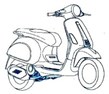
This case involves two lawsuits filed in Vietnam by Piaggio & C. S.p.A. (hereinafter referred to as “Company P”), a leading European motorcycle manufacturer, alleging infringement of industrial design and trademark rights. Headquartered in Pontedera, Pisa Province, Italy, Company P has long been a major participant in the European two-wheeled vehicle market and maintains a significant investment presence in Vietnam. In 2012, Company P established a scooter engine manufacturing facility in Vinh Phuc Province, Vietnam. Its products entered the Vietnamese market at an early stage, and the Piaggio brand has become one of the most popular brands in the local market. Furthermore, Company P holds multiple valid industrial design registrations and trademark rights in Vietnam. The relevant rights involved in this case are summarized in Table 1.
Table 1. Industrial designs and trademarks involved in the case
|
Industrial design |
Trademark 1 |
Trademark 2 |
Trademark 3 |
  |
 |
 |
 |
|
Registration number 20652 Registration Date: 2015-02-27 |
International Registration No. 1192803 Classes 9, 12, and 28 |
Registration number 169869 Category 12 |
International Registration No. 770603, Class 12 |
In one of the two cases, the defendant was Eco Bike Viet Nam Joint Stock Company (hereinafter referred to as "Company E"), which also manufactures and distributes electric vehicles in the Vietnamese market. Company P alleged that the vehicle designs manufactured and sold by Company E infringed upon Company P's industrial design rights and registered trademark rights, and were causing substantial economic losses to Company P. The case was heard in the first instance by the People's Court of Hung Yen Province, Vietnam.
In another case, the defendant was Detech Technology Development Supporting Joint Stock Company ( hereinafter referred to as "Company D"), which also engages in the manufacturing and marketing of electric motorcycles in Vietnam. Company P alleged that the design of the electric motorcycles manufactured and sold by Company D infringed upon its industrial design rights. This case was heard in the first instance by the People's Court of Hanoi, Vietnam.
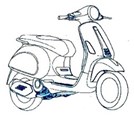
In this case, Company P conducted a systematic comparative analysis between the accused products and its registered industrial design (See Table 2).
Table 2 Infringement Comparison Analysis
|
Industrial Design of Company P
|
Company E's infringing product photos |
  |
 |
From an overall perspective, Company P argued that the electric vehicles manufactured and sold by Company E are substantially similar to Industrial Design Registration No. 20652 and constitute an unauthorized imitation. Specifically, the protruding front structure, forward‑extending circular elements, flat side panels extending symmetrically, wide and low‑set footrests, and the broad, tapering rear design are all highly similar in overall visual effect. In addition, the layout and proportions of key components are nearly identical. From a partial perspective, ① Front: The handlebars, headlights, side panels, front fender, and front wheel design are substantially similar; ② Middle: Elements such as the rider and passenger footrests, front storage compartment, ignition system, and display panel are similar; ③ Rear: The seat, rear cover, taillights, and additional details share identifiable similarities.
The Defendant affixed the sign “P and Device,” consisting of a rectangle bearing the letters “PX1 E,” on electric motorcycles that the Defendant manufactured and distributed, and sold electric motorcycle stamps printed with trademarks 1 and 2 to consumers. These acts are likely to cause confusion with the Plaintiff’s Trademark 3, which may cause the relevant public to confuse the source of the goods and the relationship between the plaintiff and the defendant. Furthermore, the plaintiff stated that the defendant's continued infringement of its industrial design rights and trademark rights has caused actual economic losses to the plaintiff (including property damage, reduced revenue and profits, lost business opportunities, and related expenses), damages that are difficult to quantify and irreversible; and that the infringement has substantially damaged the plaintiff's goodwill and corporate reputation.
As can be seen from the judgment, one of the core pieces of evidence provided by the plaintiff was the Bailiff Report No. 180/2017/VB-TPLHD issued by the Bailiff Office of District H1 on July 28, 2017, which proved that the defendant's use of its motorcycle design and trademark was not protected. Another core piece of evidence was the Industrial Property Expert Conclusion No. KD 113-16YC/KLGĐ issued by the Vietnam Intellectual Property Research Institute on January 13, 2017, which proved that the basic design features of the electric motorcycle products produced by the defendant were no different from the protected industrial product design and that the defendant's product design was a copy of the plaintiff's protected industrial product design.
Despite repeated summons, the defendant failed to participate in mediation and court proceedings. Although its representative argued that it had not used the plaintiff's trademark, it failed to provide valid counter-evidence. Based on clear facts of infringement and a complete chain of evidence, the court found no obstacles to establishing infringement.
This case differs from the Company P v. Company E case, where Company P did not claim trademark infringement; the core dispute focused on the determination of industrial design infringement. (See Table 3.)
Table 3 Comparison of the industrial designs of P Company and E Company involved in the case.
|
Industrial Design of Company P Registration No. 20652 |
Comparison chart of Company E's infringing products |
  |
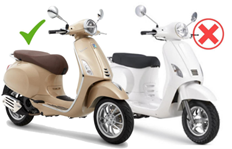 |
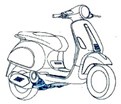
Company P argues that the defendant's electric motorcycle design does not differ significantly from the plaintiff's registered design No. 20652 in overall visual effect, constituting substantial replication. From an overall design perspective, the front of the vehicle is raised, with round headlights protruding forward and a flat front fender extending evenly to both sides; the footrests are wide and low-set, and the rear is broad and gradually narrows towards the rear. Not only are they highly similar in overall shape, but the layout and proportions of their individual components are also nearly identical. Therefore, the similarity between the two is readily apparent in both design drawings and photographs.
The layout infringement comparison is as follows: ① Front: The handlebars, headlights, front pocket, mudguards, and front wheel design are similar to the patent features; ② Middle: Details such as the driver/passenger foot pedals, front storage box, electric lock, and display clock are similar to the patent features; ③ Rear: The saddle, rear cover, taillights, and additional details are all similar to the patent features.
According to the judgment, one of the core pieces of evidence provided by the plaintiff was the assessment conclusion No. KD001-17YC/KLGĐ issued by the Vietnam Intellectual Property Research Institute on January 13, 2017, which confirmed that the defendant's electric vehicle design constituted an infringement of the registered design No. 20652. Another core piece of evidence was a bailiff's report, which showed that the chassis number and engine number of the electric vehicle model indicated on the VAT invoice of LA Trade Development Company Limited dated July 28, 2017 , the factory quality inspection certificate (No. 0176) issued by the defendant on March 1, 2017, and the model certificate (No. 0199) issued by the Vietnam Registry on February 17, 2017, were consistent with the vehicle model purchased by the plaintiff and submitted for assessment.
According to the judgment, the defendant's defense consisted of two main points. Firstly, the defendant argued for exemption from liability based on a prior assessment report. The primary reason was that before producing and selling the electric vehicles, the defendant had applied to the Vietnam Intellectual Property Research Institute for an assessment of the industrial design of the proposed product. On September 7, 2016, the Vietnam Intellectual Property Research Institute issued Industrial Property Assessment Report No. KD054-16YC/KLGD, concluding that the defendant's "electric motorcycle" design was not a copy of a similar product design protected in Vietnam. Based on this assessment, the defendant completed the production and distribution registration procedures for the electric motorcycle. Therefore, the defendant argued that the plaintiff's grounds for the lawsuit were unfounded and requested the court to dismiss all of the plaintiff's claims. Secondly, the defendant denied any product relevance: currently, the defendant's warehouses and dealerships do not possess electric vehicles similar to the model claimed by the plaintiff. The defendant also argued that the model purchased by the plaintiff was insufficient to prove that it was manufactured by them.
Therefore, the key issue in this case is how the court should determine these two contradictory assessments, and whether the electric vehicle used by the plaintiff for comparison in the infringement comparison was indeed manufactured and sold by the defendant without any authorization. This determination depends on the consistency between the product's identification information (such as chassis and engine serial numbers) and the corresponding commercial documents (including sales invoices and quality inspection certificates).
In the two intellectual property infringement cases filed by Company P against Company E and Company D, the Vietnamese courts ruled in favor of all of Company P's claims in the first instance.
The Hung Yen Provincial Court held that, faced with the defendant's passive response (failure to substantially participate in the trial and examination of evidence), the court primarily relied on the three-tiered chain of evidence constructed by Company P—the design registration certificate (the basis of ownership), the trademark registration certificate (the source of the trademark right), and the infringement assessment report from the Vietnam Intellectual Property Research Institute (professional opinion)—to directly establish the infringement facts. Because the infringement facts were clear, the evidence was conclusive, and neither the defendant nor the People’s Procuracy[1]appealed, the first-instance judgment became effective.
The Hanoi court's judgment presented a more complex battle of evidence: both the plaintiff and the defendant submitted opposing assessments from the Vietnam Institute of Intellectual Property. The court did not mechanically accept any unilateral conclusion, but instead focused on the substantial connection between the infringing goods and the defendant. Regarding the defendant's argument that "the electric vehicle in question is not its model," the court, through evidence comparison, found that:
The vehicle frame number and engine number of the electric vehicle used for infringement assessment completely match the information stated on the VAT invoice (No. 0001074), the factory quality inspection report (No. 0176/XM-TT-801684/400/0199/VAQ06-01/16-00), and the model quality certificate (No. 0199/VAQ06-01/16-00) .
This coded tracing system completely negated the credibility of the defendant's defense, and ultimately, all of the plaintiff's claims were supported. Neither the defendant nor the People's Procuratorate appealed, therefore the first-instance judgment immediately took effect.
Before products are officially put into production, companies should prioritize the registration and protection of industrial designs and other core intellectual property rights. This is a key measure to ensure the company's operational freedom and effectively prevent the risk of infringement litigation.
The case of Company P v. Company D provides a profound warning. Before commencing production and sales of electric motorcycles and electric bicycles, Company D applied for an industrial property assessment from the Vietnam Intellectual Property Research Institute regarding its product design and obtained an assessment conclusion that "the design is not a copy of an existing industrial design in a protected category in Vietnam." Based on this assessment, Company D proceeded with product production and market circulation, but ultimately still became embroiled in infringement litigation. Regardless of its subjective intent, this case clearly reveals the significant legal risks inherent in relying solely on third-party assessments while neglecting formal official registration protection.
While third-party assessments have some reference value, their legal force is far less than that of exclusive rights certificates granted by national intellectual property authorities (such as the Vietnam Intellectual Property Office or the China National Intellectual Property Administration). Assessment conclusions may be subjective due to factors such as limited search scope, inconsistent comparison standards, or the timeliness of novelty and inventiveness assessments, and may even be overturned in the future, making them difficult to serve as effective legal defenses or infringement exemptions.
Therefore, before a new product is officially put into production, companies should not simplify intellectual property protection to an external evaluation report, but should make systematic advance plans, take proactive measures, and build a comprehensive intellectual property protection system that covers both defense and offense.
In intellectual property practice in Vietnam, the assessment opinions issued by the Vietnam Intellectual Property Research Institute are routine and of significant reference value. For example, given the current state of maintenance of the Vietnam Intellectual Property Office's online trademark database, trademark searches typically require commissioning the Vietnam Intellectual Property Research Institute to conduct a formal search and obtain the results. These results are considered an important basis for assessing the feasibility of trademark registration and the risks of its use.
For Chinese companies, a thorough understanding of local practices in Vietnam is crucial. This not only helps in acquiring and maintaining stable intellectual property rights, but also often necessitates relying on the assessments of the Vietnam Intellectual Property Research Institute or the official opinions of the Vietnam Intellectual Property Office when handling infringement disputes (whether as plaintiff or defendant). Currently, the Vietnam Intellectual Property Research Institute, under the Ministry of Science and Technology, is the most effective institution authorized to evaluate and determine whether there are significant differences between counterfeit products and genuine products. Its assessments hold key evidentiary value and serve as important grounds for initiating infringement lawsuits.
It should be noted that while the assessment conclusions of the Vietnam Intellectual Property Research Institute are crucial, their findings are not always consistent (as seen in the case of Company P v. Company D). Therefore, ensuring the stability of intellectual property rights and constructing a complete chain of evidence in litigation are particularly important.
In the two cases mentioned above, Company P successfully protected its rights by comprehensively utilizing both industrial design and trademark rights. In one case, the company even won solely based on its industrial design rights. These two cases together reveal a key strategy for intellectual property rights planning and protection in the Vietnamese market: constructing and effectively integrating prior rights for industrial designs and trademarks, and adopting a "combined" approach to rights protection, is a crucial strategic measure to significantly improve the success rate of infringement cases.
Specifically, industrial designs aim to protect the unique visual aesthetic features of a product, effectively combating the copying of its overall or partial design. Trademark registration, on the other hand, protects brand identities (such as words and graphics) to prevent consumer confusion regarding the source of goods. When infringing products simultaneously imitate the appearance of a product and use the same or similar trademarks, a dual-track approach to asserting rights offers a significant advantage. Therefore, in the case where Company P adopted a combined rights protection strategy, the defendant was virtually unable to mount an effective defense, fully demonstrating the significant advantage of Company P's prior rights, and making its infringement undeniable.
Therefore, Chinese companies planning to enter or already operating in the Vietnamese market should develop a forward-looking intellectual property strategy: For core products, they must simultaneously and promptly apply for industrial designs and trademarks in Vietnam, and secure utility model and invention patents to ensure clear and stable prior rights. Upon discovering infringement, its specific characteristics should be promptly assessed. If the infringement involves multiple types of intellectual property rights, claims should be decisively integrated, and a comprehensive rights protection action should be initiated with the courts or relevant administrative authorities, rather than relying on a single right basis. This integrated rights protection strategy helps maximize the use of legal tools, significantly increasing the likelihood of curbing infringement and obtaining adequate legal remedies.
These two typical cases demonstrate that Vietnamese courts exhibit a pragmatic and comprehensive approach in adjudicating intellectual property infringement cases. Several core claims raised by the plaintiffs, including cessation of infringement, destruction of infringing goods, cancellation of product quality certificates, public apology through the media, and reimbursement of legal fees and costs related to preventative measures, were all supported by the courts. However, Vietnamese judicial practice still exhibits significant limitations in calculating damages—courts strictly apply the principle of compensatory damages, only recognizing actual expenses that the plaintiffs can prove with sufficient evidence (such as legal fees, intellectual property valuation fees, and costs of purchasing and comparing infringing products), without introducing punitive damages mechanisms or conducting substantive accounting of the economic losses claimed by the plaintiffs.
In the case of Company P v. Company E: the plaintiff initially claimed 500 million VND in economic losses (excluding attorney fees), but after adjusting the litigation strategy, the court ultimately supported only the verifiable actual expenses ( 200 million VND in attorney fees and 14.7 million VND for the purchase of model cars, certificate production, and intellectual property valuation). The same logic was followed in the case of P Company v. D Company. This reflects the cautious stance of the Vietnamese judicial system towards damages — only expenses that have actually occurred and are supported by invoices are recognized. Indirect economic losses or commercial losses resulting from infringement are generally not accepted due to the lack of unified calculation standards and clear guidelines.
For Chinese companies, when initiating intellectual property infringement lawsuits in Vietnam, it is crucial to understand that courts typically limit damages to quantifiable actual expenses, while claims for punitive damages and damage to goodwill are less likely to be supported. Furthermore, before initiating litigation, companies should systematically review and properly preserve all relevant expense receipts, including but not limited to attorney fee invoices, expert reports, and invoices for evidence preservation expenses, to ensure that these costs are included in the court's verifiable compensation scope.
While Vietnamese courts have certain limitations in terms of the amount of economic compensation, they have a high support rate for injunctive relief measures such as ceasing infringement, destroying infringing products, and issuing public apologies through the media. These measures can still effectively curb infringement to a certain extent and safeguard the legitimate rights and interests of enterprises and market order. Therefore, enterprises should strengthen the standardization and completeness of evidence management and reasonably set their rights protection claims in accordance with local judicial practices, thereby maximizing the effectiveness of rights protection within the current legal framework of Vietnam, while adjusting compensation expectations to a reasonable level that conforms to local judicial realities.
Contributors
Amanda Yang
Vanessa Wang
Yen Vu
Ly Nguyen
[1] According to Article 278 of Vietnam's Civil Procedure Law, The head of the procuracy of the same level or the immediate superior level shall be entitled to appeal against the first-instance court's judgments or decisions to suspend or terminate the resolution of the cases in order to request the immediate superior Court to directly settle the cases according to the appellate procedures. Reference link: Vietnam Civil Procedure Code No. 92/2015/QH13 of November 25, 2015, WIPO Lex
This article was first published in the Compilation of Case Studies on Overseas Intellectual Property Dispute Responses (2022–2024) by Intellectual Property Publishing House, Ltd.


