
CNIPA Releases 2025 Intellectual Property Protection Status Report
Date: 7 May 2026
China has seen a marked improvement in intellectual property governance in 2025, with public satisfaction score for IP protection reaching 82.81 and high-value invention patents per 10,000 people rising to 16. For the first time, China entered the world’s top 10 rankings in the Global Innovation Index (GII) 2025 published by WIPO.
In terms of judicial protection, in 2025 courts nationwide concluded 460,422 out of 473,411 newly accepted first-instance civil IP cases; 25,899 out of 27,451 newly accepted first-instance administrative IP cases; and 9,248 out of 9,018 newly accepted first-instance criminal IP cases.
Administratively, market regulation authorities at all levels handled 881 patent infringement cases and destroyed 3,683 tonnes of counterfeit and substandard goods covering over 200 product categories, valued at RMB 432 million (approx. US$ 63.3 million). The authorities handled 36,000 trademark infringement cases involving goods worth RMB 674 million (approx. US$ 98.8million) and transferred 1,128 suspected criminal trademark cases to judicial authorities. As for copyright, alongside the ‘Sword Net 2025’ campaign against online piracy, copyright enforcement authorities inspected 484,400 market entities and handled 2,713 infringement cases in brick-and-mortar stores.
Regarding approvals and registrations, China had 6.318 million valid invention patents by the end of 2025 (an 11.1% year-on-year increase), 53.032 million valid registered trademarks (up 6.5%), and 10.677 million annual copyright registrations (up 0.44%).
Source: CNIPA
https://www.cnipa.gov.cn/art/2026/5/7/art_91_206318.html
国家知识产权局发布《二〇二五年中国知识产权保护状况》
日期:2026-05-07
2025年中国知识产权治理能力和治理水平显著提升,知识产权保护社会满意度得分提高到82.81分,中国每万人高价值发明专利拥有量达16件,中国在世界知识产权组织发布的《2025年全球创新指数(GII)报告》中首次跻身全球前十。
司法保护方面,全国法院新收知识产权民事一审案件473411件,审结460422件;全国法院新收知识产权行政一审案件27451件,审结25899件;全国法院新收知识产权刑事一审案件9018件,审结9248件。
行政保护方面,专利方面,全国各级市场监管部门共查处专利违法案件881件,共销毁侵权假冒伪劣商品3 683吨,涉及200余个品种,总货值4.32亿元;商标方面,全国各级市场监管部门共查处商标违法案件3.6万件,涉案金额6.74亿元,依法向司法机关移送涉嫌犯罪案件1128件;版权方面,开展打击网络侵权盗版“剑网 2025”专项行动等,全国各级版权执法部门检查实体市场相关单位48.44万家(次),查处实体市场侵权盗版案件2713件。
审批登记方面,截至2025年底,中国发明专利有效量达631.8万件,同比增长11.1%;有效注册商标量达5303.2万件,同比增长6.5%;著作权年登记总量1067.7万件,同比增长0.44%。
资料来源:国家知识产权局
新闻链接:https://www.cnipa.gov.cn/art/2026/5/7/art_91_206318.html
The Primary People's Court of Huangpu District of Guangzhou City Concludes China’s First Criminal Case involving Copyright Infringement of AI Short Dramas
Date: 8 May 2026
A company independently developed a game software and an intelligent video generation tool. By inputting text scripts, selecting materials, and setting parameters such as camera angles, creators can use this tool to independently generate AI short drama. Under the terms of service agreement, copyright in the AI generated short drama is jointly owned by the users and the company, and the videos can only be uploaded to officially designated platforms for paid viewing. Without the permission of the copyright holders, Defendants Qin and Sha illegally duplicated and copied the aforesaid content using short video platform programs and screen-recording software. They stored the copies in cloud storage and publicly sold them via online platforms for profit by sharing links after receiving payment. Appraisal confirmed that at least 1,716 AI short drama videos in the Defendants’ cloud storage were identical to the rights holder’s videos on the relevant platforms. From February 2024 until the case was uncovered, the Defendants sold and shared links approximately 200 times, generating illegal proceeds of over RMB 2,300 (approx. US$ 337). In March 2026, the procuratorate prosecuted Defendants Qin and Sha.
The Primary People's Court of Huangpu District of Guangzhou City held that during the creation of AI short dramas, users made personalised choices, arrangements, and designs, resulting in comprehensive and complete conceptualisations for the overall expression of the videos.
The generated AI Short Dramas are the intellectual creations of the users. Their dominant creative guidance during production of the dramas demonstrates originality. The AI Short Dramas should, therefore, be recognised and protected as audio-visual works. For profit, the Defendants reproduced and disseminated 1,716 copyright works without permission. Such conduct constitutes ‘other serious circumstances’ as stipulated in Article 13 of the Interpretation of the Supreme People's Court and the Supreme People's Procuratorate on the Application of Laws for Criminal Cases of Intellectual Property Infringement. The Court finally found both Defendants guilty of copyright infringement. They were each sentenced to eight months' imprisonment, suspended for one year and two months, and fined RMB 6,000 (approx. US$ 880) and RMB 3,000 (approx. US$ 440).
Source: Guangzhou Intermediate People's Court
https://mp.weixin.qq.com/s/0OE2CXmVyoCpGRSUjFcIjA
广州市黄埔区人民法院审结全国首例AI短剧侵犯著作权刑事案件
日期:2026-05-08
某公司自主开发了某游戏软件和某智能视频生成工具,创作者可通过输入文字剧本、选定素材并设定镜头等参数,利用该工具自主生成AI短剧视频。根据约定,生成的短视频由用户与某公司共同享有著作权,且仅能上传至官方指定平台供观众付费观看。被告人覃某、沙某未经著作权人许可,利用短视频平台程序或录屏软件非法翻录复制上述内容,并将其储存在网盘中,以收款后分享链接的方式在网络平台上公开销售牟利。经鉴定,被告人覃某、沙某网盘中至少有1716部短剧视频与权利人某公司在相关平台的短剧视频具有同一性,自2024年2月至案发销售分享链接约200次,违法所得数额2300余元。检察机关于2026年3月依法对被告人覃某、沙某提起公诉。
广州市黄埔区人民法院认为,用户在短剧视频创作过程中投入了个性化的选择、编排、设计,对短剧视频的整体表达进行了全面、完整的构思与安排,生成的短剧视频是用户的智力创作成果,用户进行了“强引导”创作,具有独创性,应认定为视听作品并予以保护。被告人覃某、沙某以营利为目的,未经许可复制并传播他人享有著作权的作品数量达1716部,构成《最高人民法院、最高人民检察院关于办理侵犯知识产权刑事案件适用法律若干问题的解释》第十三条规定的“其他严重情节”,最终认定被告人覃某、沙某犯侵犯著作权罪,均判处有期徒刑八个月,缓刑一年二个月,并分别处罚金人民币六千元、三千元。
资料来源:广州市中级人民法院
新闻链接:https://mp.weixin.qq.com/s/0OE2CXmVyoCpGRSUjFcIjA
Shanghai Intellectual Property Court Upholds Honor Company’s Claim of Compensation of RMB 30 Million (approx. US$ 4.40 Million) in the ‘Honor’ Trademark Infringement Dispute
Date: 25 May 2026
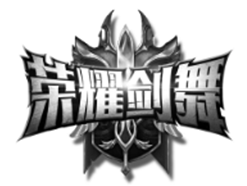
The Plaintiff, Honor Device Co., Ltd., is the owner of the registered trademark ‘Honor’ (No. 10638363). Upon discovering that seven Defendants, including Chuang Company and Mai Company, were selling laptop computers bearing the ‘Honor Sword Dance’ mark on e-commerce platforms, the Plaintiff filed a Trademark Infringement lawsuit before the Court.
 |
 |
|
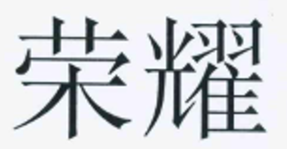
The ‘Honor’ trademark (No. 10638363) belongs to the Plaintiff Honor Device Co., Ltd. |
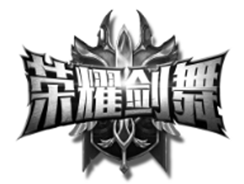
The ‘Honor Sword Dance’ trademark (No. 30502169) was assigned to Defendant Mai Company from a third party. |
The First-instance Court held that the Defendant Mai Company had acquired the No.30502169 ‘Honor Sword Dance’ trademark from a third party and licensed its use to Chuang Company and others. Chuang Company purchased bare computers, affixed the above mark, and sold the finished goods as the manufacturer. The ‘Honor Sword Dance’ trademark was later declared invalid. Both Mai Company and Chuang Company, as well as two other companies, Wu Company and Ci Company, that displayed and sold the computers via their online stores, were held to have committed trademark Infringement. As the Defendants’ No.30502169 mark had been a registered trademark when the infringements occurred, punitive damages did not apply. The First-instance Court ordered Mai Company and Chuang Company to pay joint compensation of RMB 12 million (approx. US$ 1.76million). The other Defendants were exempted from liability for several reasons, including the fact that they had fulfilled their duty of care as online service providers. Dissatisfied with the ruling, the Plaintiff appealed to the Shanghai Intellectual Property Court, requesting the application of punitive damages and total compensation of RMB 30 million (approx. US$ 4.40 million) for economic loss and reasonable expenses.
Upon review, the Shanghai Intellectual Property Court found that the infringing entities were affiliated companies, some of which manufactured and sold tablet computers printed with the challenged sign. After the ‘Honor Sword Dance’ trademark (No. 30502169) had been declared invalid, Mai Company and Chuang Company continued manufacturing and selling the challenged products. That demonstrated a clear subjective intent to infringe. Regarding illegal profits, the total sales of the infringing products exceeded RMB 180 million (approx. US$ 26.39 million), with sales after the invalidation ruling amounting to more than RMB 28.97 million (approx. US$ 4.25 million). The Court ruled that punitive damages should be applied to the infringing acts committed after receipt of the invalidation ruling. Based on the sales amount, combined with the profit margin claimed by the Plaintiff and the multiplier for punitive damages, the Court calculated the compensation amounts separately for the periods subject to and exempt from punitive damages. As the total calculated amount exceeded the Plaintiff’s appeal claim, the Shanghai Intellectual Property Court fully upheld the Plaintiff’s appeal for RMB 30 million (approx. US$ 4.40 million) and ordered Mai Company and Chuang Company to cease all Trademark Infringement acts.
Source: Shanghai Intellectual Property Court
https://mp.weixin.qq.com/s/T295b6bUT5-1sDKpHfnwMQ
上海知产法院在涉“荣耀”商标侵权纠纷案中全额支持荣耀公司3000万元赔偿请求
日期:2026年5月25日
原告荣耀公司系第10638363号“荣耀”商标的商标权人,原告荣耀公司发现被告创某公司、麦某公司等七被告在电商平台上销售印有“荣耀剑舞”标识的笔记本电脑,遂以上述行为构成商标侵权为由诉至法院,并主张2倍的惩罚性赔偿,要求七被告连带赔偿5000万元。
 |
 |
|
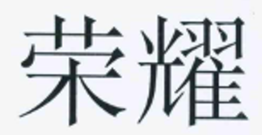
原告荣耀公司第10638363号“荣耀”商标 |
被告麦某公司从案外人处受让的第30502169号“荣耀剑舞”商标 |
一审法院经审理认为被告麦某公司从案外人处受让第30502169号“荣耀剑舞”商标后许可创某公司等使用,创某公司采购裸机后贴上前述标识并作为被诉产品的生产商对外销售,该商标随后被宣告无效,因此使用了该商标的创某公司和麦某公司,以及在其经营店铺展示并销售被诉产品的伍某公司、赐某公司构成商标侵权,因第30502169号“荣耀剑舞”商标曾系注册商标,故不适用惩罚性赔偿,判令麦某公司、创某公司共同赔偿荣耀公司1200万元。七被告中其他被告则因网络服务提供商已尽到了注意义务等原因无需承担赔偿责任。原告荣耀公司不服,向上海知产法院提出上诉,要求改判适用惩罚性赔偿并判令被告赔偿经济损失及合理支出共计3000万元。
上海知识产权法院经审理认为,各侵权主体为关联公司,其中部分主体生产、销售带有被诉标识的平板电脑,在麦某公司、创某公司收到第30502169号“荣耀剑舞”商标无效裁定后,仍然继续生产、销售被诉产品,故自该日之后的行为,两公司具有明显侵权的主观故意。侵权获利数额方面,被诉产品总销售额超1.8亿元,其中收到无效宣告裁定书后被诉产品的销售额仍高达2897万余元,被诉行为的侵权获利巨大,故对于收到无效宣告裁定书后实施的被诉行为应当适用惩罚性赔偿。法院根据被诉产品的销售金额,结合荣耀公司主张的利润率、惩罚性赔偿的倍数,分别计算适用惩罚性赔偿和不适用惩罚性赔偿的赔偿金额,最终计算得出的赔偿总额已超过荣耀公司上诉的赔偿请求,故上海知识产权法院改判全额支持荣耀公司3000万元的上诉请求,并判决麦某公司与创某公司停止商标侵权行为。
资料来源:上海知识产权法院
新闻链接:https://mp.weixin.qq.com/s/T295b6bUT5-1sDKpHfnwMQ
Guangzhou Intellectual Property Court Concludes Case Involving Infringement of ‘MIXUE’ Registered Trademark and Overall Store Trade Dress- Infringer Ordered to Pay RMB 5 Million (approx. US$ 74,000) in Damages
Date: 21 May 2026
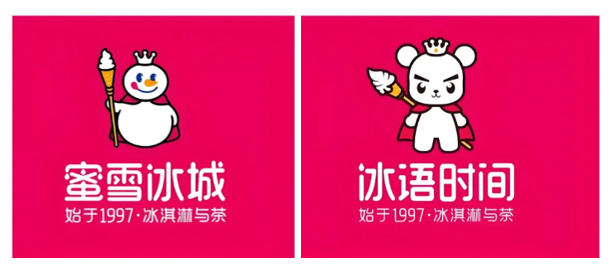
MIXUE Logo (Left) vs. Alleged Infringing Sign (Right)
The Plaintiff, MIXUE Group, owns a portfolio of registered trademarks covering the ‘Snow King Logo Graphic’. The ‘MIXUE’ brand and trademarks have achieved high market recognition and a significant market share. By uniformly selecting and incorporating elements of the MIXUE brand and trademarks into storefront signs, counter decorations, menus, and staff uniforms, the Plaintiff created a unique and consistent store decoration style, widely recognised by consumers.
The Defendant Bing Company authorised franchisees to open milk tea shops across Henan, Shandong, Guangdong and other provinces and municipalities. It authorised the application of the allegedly infringing signs to storefronts, milk teacups, menus and other materials. The overall store trade dress of these outlets (including signs, front desks, and staff uniforms) was essentially identical to that of the Plaintiff. Furthermore, Bing Company published content that closely mirrored the MIXUE brand on its official website, WeChat official accounts and other channels; ran promotional advertisements that copied the Plaintiff’s drink names, logos and trade dress; and recruited franchisees nationwide. Authorised by Bing Company, Shun Snack Shop operated a milk tea outlet using the infringing trademarks and store trade dress to sell beverages. Consequently, the Plaintiff filed a lawsuit against Bing Company and Shun Snack Shop, alleging infringement of its exclusive trademark rights and unfair competition.
At first instance, the Baiyun District People’s Court of Guangzhou City held that the Plaintiff’s overall store trade dress possesses distinctive recognisability and high market fame due to extensive promotion, and, as a result, constitutes ‘influential trade dress’ protected under the Anti-Unfair Competition Law. The Court ruled that Bing Company's authorization and Shun Snack Shop's use of the alleged infringing signs and trade dress constituted both trademark infringement and unfair competition. It ordered Bing Company to compensate the Plaintiff for economic loss and reasonable enforcement expenses totalling RMB 5 million (approx. US$ 733,041). Dissatisfied with the ruling, Bing Company filed an appeal. The Guangzhou Intellectual Property Court dismissed the appeal and upheld the original judgment.
Source: China Intellectual Property News
https://mp.weixin.qq.com/s/bQNdf4ee9KGvoVtFKbcbHA
广州知识产权法院审结一件侵害“蜜雪冰城”注册商标及店铺整体装潢纠纷案,侵权人被判赔500万元
日期:2026-05-21
蜜雪冰城标识(左)与被诉侵权标识(右)的对比图
蜜雪冰城公司系“雪王Logo图形”系列商标(下称权利商标)的权利人,其 “蜜雪冰城”品牌及权利商标在市场中已具有较高的知名度和市场份额。蜜雪冰城公司通过店招、吧台摆件、点餐单、员工工装等元素的统一选择与组合,形成了旗下店铺独特且统一的装修风格与装潢效果,相关元素已为广大消费者熟知。
冰某公司在河南、山东、广东等多省市授权他人加盟开设奶茶店,在店铺招牌、奶茶杯、菜单等多处使用被诉侵权标识,其门店装潢(含招牌、前台、店员服装等)亦与蜜雪冰城公司店铺装潢基本一致;同时,冰某公司在官网、微信公众号等平台发布与“蜜雪冰城”品牌近乎相同的内容,模仿其饮品名称、标识及装潢进行广告宣传,并对外开展加盟招商。顺某小吃店在冰某公司授权下,使用相关侵权商标及装潢开设奶茶店并销售饮品。蜜雪冰城公司遂以冰某公司、顺某小吃店侵害其商标专用权及构成不正当竞争为由提起诉讼。
广州白云法院一审认为,蜜雪冰城公司店铺整体装潢具有显著识别性,经广泛推广已具有较高市场知名度,构成《反不正当竞争法》保护的“有一定影响的装潢”。冰某公司授权使用及顺某小吃店使用侵权标识、装潢的行为侵害了蜜雪冰城公司商标专用权,同时构成不正当竞争。广州白云法院一审判令冰某公司赔偿蜜雪冰城公司经济损失及维权合理费用共计500万元。一审宣判后,冰某公司不服提起上诉,广州知识产权法院二审判决驳回上诉,维持原判。
资料来源:中国知识产权报